
Charity Governance
What Is Charity Governance
Charity governance refers to the framework of rules, practices, and processes by which a charitable organisation is directed, controlled and held accountable. It is how a charity ensures its mission is delivered ethically, transparently and sustainably.
Good governance supports trust in the organisation, ensures compliance with legal obligations, and helps guide decisions at the board level.
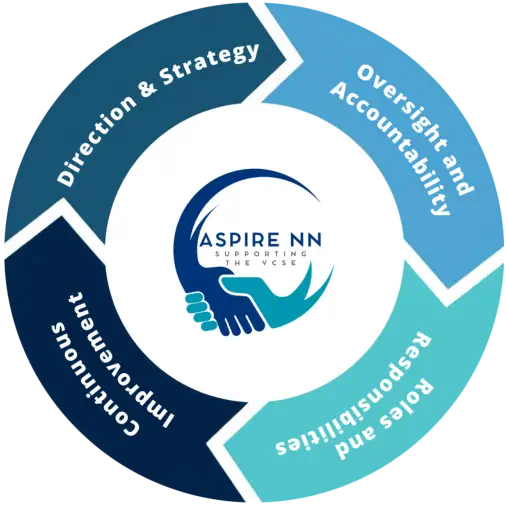
Effective governance typically involves

Direction & strategy
The board defining purpose, setting strategic goals, and guiding long-term direction
Oversight & Accountability
Monitoring performance, ensuring regulatory compliance, managing risks, and holding leadership to account
Roles & Responsibilities
Clarity about what trustees, staff, volunteers and other stakeholders do, and how decisions are made
Continuous Improvement
Periodic governance reviews, skills audits, and adapting to changes in context or sector expectations
At Aspire, we believe that strong governance is foundational - not merely administrative. It underpins credibility, effectiveness, and the long-term success of our charitable work.
Further Guidance & Resources
We recommend the following NCVO resources to support your understanding and implementation of good governance:
NCVO - What is governance?
It is how a charity ensures its mission is delivered ethically, transparently and sustainably through a framework of rules, practices, and processes.
NCVO - Charity Governance Code
A widely endorsed framework offering principles and recommended practices to guide trustees and boards toward higher standards.
NCVO - Carrying out a governance review
How to evaluate your governance arrangements, identify strengths and gaps, and plan improvement.
NCVO - Tools & guidance for boards
Templates, tools and other practical support to help trustees fulfil their duties.